
Tonopah Camp Release Status
Tonopah Conservation Camp is not an operating release point. Nevada legislative material states that the camp closed in November 2022 and its residents were transferred to Pioche Conservation Camp. NDOC's current facility list labels Tonopah “SHUTTERED.” A search for a release directly from Tonopah in 2026 would start from a false premise.
Follow the individual through Nevada Department of Corrections records. The statewide offender result may show a later institution, parole location, inactive or discharged status, sentence dates, and release information. A transfer away from Tonopah continued state custody. Parole later ended confinement but continued supervision. Discharge can mark the end of a sentence or supervision term, depending on the record label. The Nye County released-inmate search provides the wider county, state, federal, and court distinctions.
| Event | Meaning | Record to check |
|---|---|---|
| Camp closure transfer | State custody continued elsewhere | NDOC location and booking history |
| Later parole | Release to community supervision | NDOC release data, Board action, P&P |
| Sentence release | Confinement ended under an NDOC release type | Dated NDOC release entry |
| Final discharge | A stated sentence or supervision term ended | Official NDOC or P&P record |
Confirm Tonopah Camp Releases
The official NDOC Inmate Search accepts an Offender ID or a first-and-last-name search. It also offers the percent sign as a wildcard. Prefer the Offender ID because names and aliases can collide. If a name search is necessary, compare all available identifiers before treating a result as the same person.
- Search statewide. Enter the NDOC Offender ID, or search the exact first and last name with documented variants when needed.
- Open the individual result. Review current status, institution or location, booking information, sentence dates, parole data, and release information.
- Separate transfer from release. A later institution means the person remained in NDOC custody after Tonopah closed.
- Read the exact date label. Parole eligibility, projected expiration, mandatory parole, and a dated release are not interchangeable.
- Request official clarification. Contact NDOC Family Services or Offender Management Division when the raw-data result is unclear.
NDOC warns that its public portal displays raw data and is not an official record. Use it to locate the correct history, then request the underlying record when proof is needed. The portal applies to Nevada state prisoners. A county-jail roster would not provide a former camp resident's full prison history.
Tonopah Camp Records Contact
There is no current camp records desk to confirm a new release. Direct status questions to statewide NDOC channels. Family Services can help interpret offender-search dates, while the Offender Management Division can provide the official release or sentence record. Give the full name, Offender ID, known book ID, and approximate dates.
Nevada Department of Corrections
Family Services: 775-977-5707
OMD Records: omdrecords@doc.nv.gov
Mail: ATTN Offender Management Division, NDOC, P.O. Box 7011, Carson City, NV 89702
Former site: Approximately 12 miles northeast of Tonopah
Ask OMD to reconcile the offender ID, book ID, later institution, location code, dated release entry, release description, and sentence expiration. A focused request can also seek the sentence computation showing parole eligibility and projected expiration. NDOC's public-record fee information lists paper copies at $0.15 per page, media at cost, and extraordinary-use charges when applicable. Estimates above $25 require prepayment, and completed records are held for 30 days.
Why Tonopah Camp Closed
Tonopah Conservation Camp opened in 1991 as an NDOC minimum-security conservation camp. It stood about 12 miles northeast of Tonopah, had a historical capacity of 152, and supported a fire-crew mission. Those facts describe its former role. They do not establish a current population or release operation.
Official legislative minutes explain that NDOC closed the camp in November 2022 because of staff vacancies and safety concerns, then moved residents to Pioche. Later budget material described the property as mothballed, and 2025 recommendations did not call for reopening it. NDOC's current facilities list uses the direct label “SHUTTERED.”
The official facility-list image shows that later status plainly.
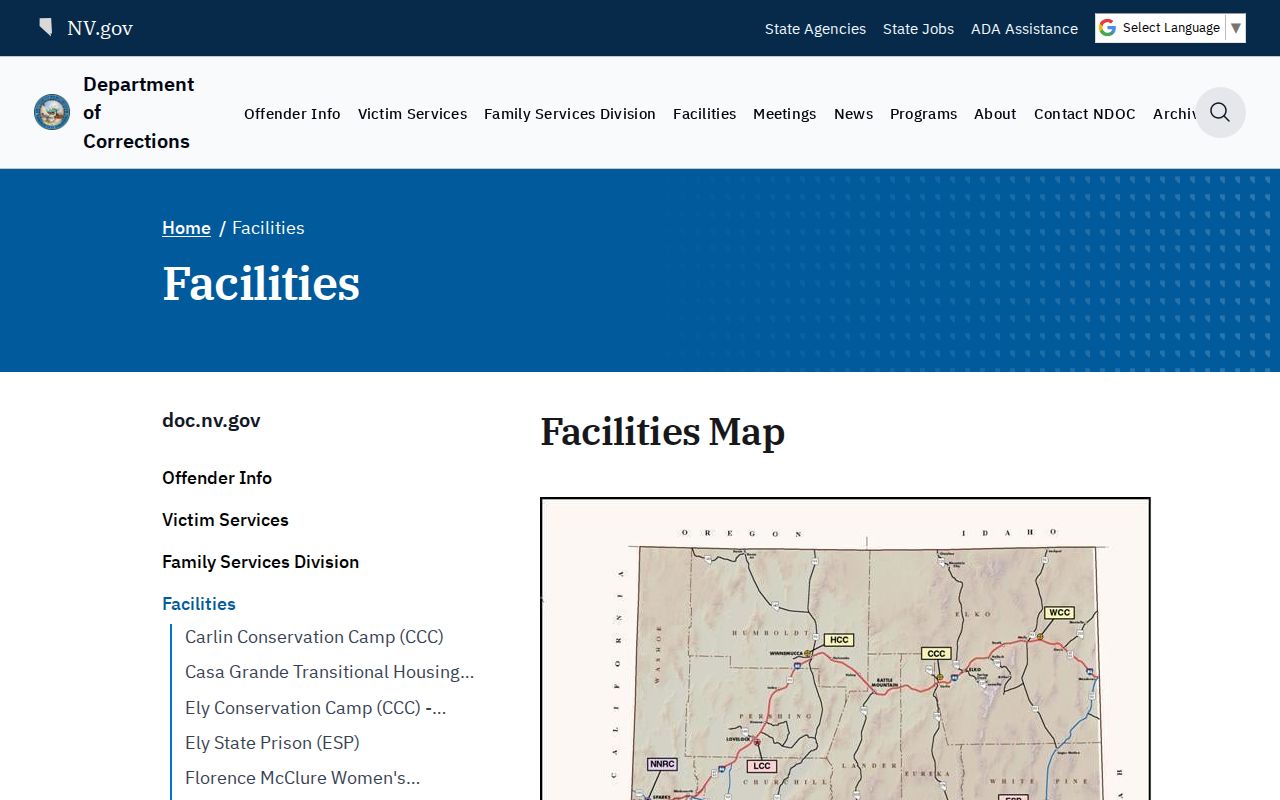
That status changes the search path: locate a former resident in NDOC's statewide history instead of calling Tonopah as though someone could be released from the gate today.
Tonopah Camp Status Records
NDOC publishes separate downloadable Demographic, Alias, Booking, Parole, and Release data. The demographic data can use the location code INACTIVE-DSCHREL, while the dated release transaction appears in the release data. A parolee may display PAROLE as a location. Those clues are useful, but the dated release row and an official OMD record provide stronger evidence of what happened.
A result may retain a historical record while showing no current institution. It may also lack a photograph or an expected tab even though a correctional history exists. The absence of one field does not erase the prior Tonopah placement or prove a final discharge. Compare the location, book ID, release description, and date.
The booking download adds sentence minimum and maximum terms, county, offense, start date, and several calculated milestones. The release download adds an offender ID, offender-book ID, release date, and release description. A name-only match is not enough. Link those records by identifiers and compare them with the individual result. Raw descriptions may contain data-entry errors, so preserve the exact entry in notes while asking OMD what the code or phrase means. This method is more reliable than treating an inactive location as a complete account of release.
- Transfer
- A move between NDOC sites while state custody continues.
- Parole
- Conditional community release under Board jurisdiction and P&P supervision.
- Release
- An end to confinement under the stated release type, not always the end of the sentence.
- Discharge
- The end of a stated sentence or supervision term when the record supports that meaning.
Tonopah Camp Release Dates
NDOC records distinguish several timekeeping milestones. PED is parole eligibility. MPR is mandatory parole release. PEXD is projected expiration. The booking dataset also includes RRD, which should not be expanded without an official definition. None of these labels should be collapsed into one promised release date.
PEXD can move forward or backward as credits, forfeitures, disciplinary action, sentence changes, consecutive or concurrent terms, parole decisions, and new holds are posted. The Parole Board does not calculate sentence expiration. NDOC Sentence Management performs that work, while the Board decides parole matters. A favorable parole action is not proof of physical release.
Tonopah Camp Parole Discharge
A former Tonopah resident who was later paroled left prison confinement but remained under Nevada Board of Parole Commissioners jurisdiction and Nevada State Police Parole and Probation supervision. Verify the NDOC identity first. Then compare the release data with the Board's monthly action for the relevant period and contact P&P for a lawful supervision-status inquiry.
Parole discharge is a later event. Under NRS 213.154, P&P issues an honorable discharge when the parole term expires and statutory conditions are met, or a dishonorable discharge when the stated criteria are not met. That document is better proof of completed parole than an old prison release date. It also helps explain why someone can be released from confinement but still subject to supervision.
Tonopah Camp NDOC Records
The camp was part of NDOC, not a Nye County jail. Its residents were state prisoners in a minimum-security conservation setting, and NDOC controlled their sentence records, transfers, parole processing, and release data. NCSO detention lines and county release requests are therefore the wrong primary route for a former camp resident.
Angle L is decisive here. Nobody should be described as newly released from Tonopah Conservation Camp after its closure. A person once housed there may later have been released from Pioche or another NDOC institution, paroled from state custody, transferred again, or discharged. Report the later institution and exact NDOC event rather than using Tonopah as the release location by default.
For reliable notes, record the source, date checked, exact status wording, Offender ID, and book ID. If the portal and another source conflict, ask OMD to reconcile the record through NDOC Records and Information. Statewide custody history is the durable path because the physical Tonopah site no longer performs intake, housing, or release.